
James Jacob Conscious Money Club
← Back to Resources
Book Review

Rich Dad Poor Dad

What the Rich Teach Their Kids About Money That the Poor & Middle Class Do Not!

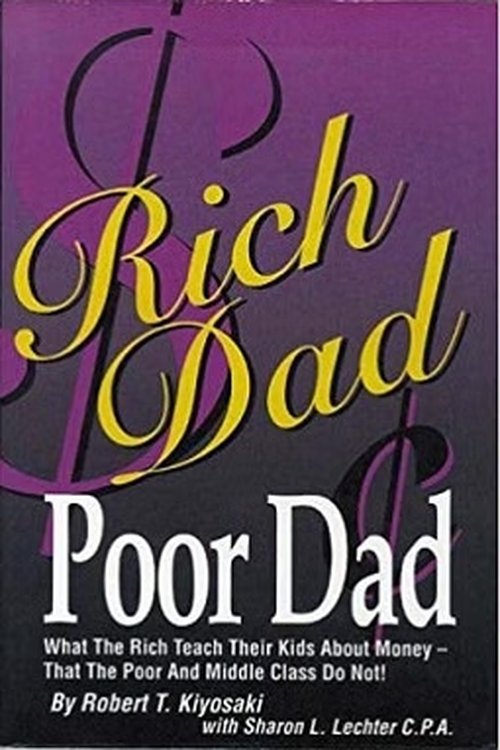
Rich Dad Poor Dad cover
Author
Robert T. Kiyosaki
Genre
Personal Finance
First Published
1997 (updated 2017)
Copies Sold
Over 40 million
Overview

A personal finance book that looks at the different philosophies of Robert's biological father (poor dad) and his best friend's father (rich dad).

The book reviews the different lessons each dad taught about work, money and investing.

It sells against the traditional route of go to school, get a job, work hard, and sells the untraditional route of entrepreneurship.

Overarching Concept

Rich dad's view: that we should work to educate ourselves financially, with the goal of becoming financially independent by getting money to work for us. Poor dad's view: that we work for money, with the main purpose of education to secure a high paying job.

Major Lessons
Assets vs Liabilities
Assets are things that put money into your pocket. The focus should be on acquiring assets rather than spending money on liabilities. Assets include businesses, stocks, and property that generate income or appreciate over time.
Financial Literacy
The importance of financial education, which covers accounting, investing and financial markets. He criticises the traditional education system for not teaching students how to manage money.
The Rat Race
The cycle of working hard, earning money, spending it on liabilities, then working to pay off those liabilities. He advocates getting out of the race by creating and/or investing in assets that generate income.
Overcome Fear & Risk
He emphasises taking calculated risks and learning from failure, and makes the point of stepping out of comfort zones for education and financial growth.
Work To Learn, Not To Earn
His emphasis is on acquiring knowledge and skills rather than just earning a pay check, becoming well rounded with commercial acumen in sales, marketing, communication and managing people.
The Need for Financial Planning
He advocates the importance of setting financial goals and having a plan to achieve them, encouraging long term thinking that aligns with financial aspirations.
Practical Advice
What to start doing today.
Start where you are, the younger the better
Begin your financial education and investment practices today, and encourage others to start early.
Pay yourself first
Ensure your money is routinely invested and automatically taken as soon as you're paid, to take away the chance of spending it on consumer items.
Take control of your financial future
Start to invest today for your future. Don't rely on governments or employers for your security.
Utilise the power of corporations for tax advantages
Use the benefits of corporations (LTDs/LLPs) to minimise taxation, maximise earnings, and protect wealth.
Summary

Robert Kiyosaki has succeeded in simplifying quite a complicated topic. Money and finance has so much attached to it, simplifying it is the first step.

The differentiation between the different types of income is a powerful one, earned versus portfolio income. The way to build wealth is to take earned income and turn it into portfolio income as quickly as possible, as the tax on earned income is the highest and mitigating this liability is paramount.

For anyone who is beginning their financial education, this book is a must read, however it can come across as a simple book to the more experienced investor.

Power Passage

“What is money if it is not real?” “What we agree it is,” was all rich dad would say.

The single most powerful asset we all have is our mind. If it is trained well, it can create enormous wealth. An untrained mind can also create extreme poverty that can crush a family for generations.

Today money is increasing exponentially. A few are getting rich from nothing, just ideas and agreements. Millions can be made instantaneously from nothing and by nothing, I mean no money was exchanged. It is done via agreement: a blip on a trader's screen in Lisbon from a trader's screen in Toronto. Money did not change hands. Agreements did.

So why develop your financial genius? Only you can answer that. I do it because I want to make money, not because I need to. It is a fascinating learning process. I want to be part of this unprecedented evolution of humanity, the era where humans work purely with their minds and not with their bodies. I want to be with people moving boldly forward. I do not want to be with those left behind.